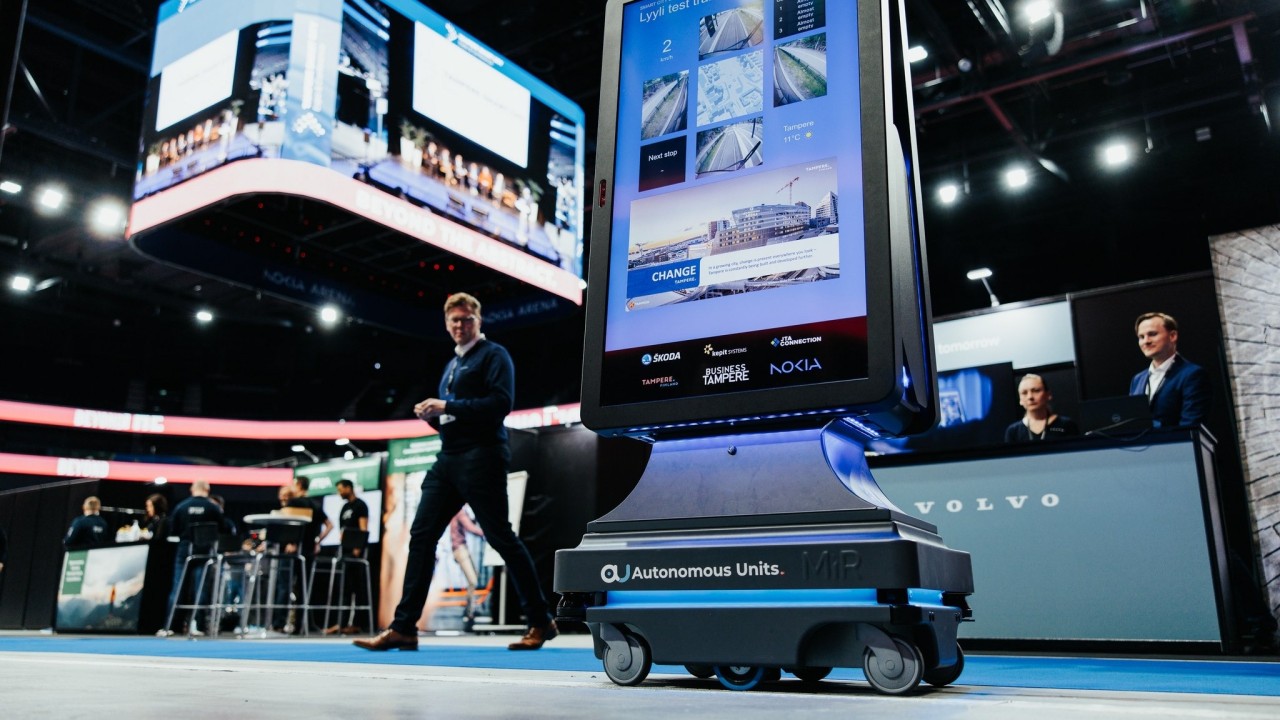
The 'why' for AI-RAN: Autonomous systems, which are already smart, can be augmented with network-level AI for 'immediacy-as-a-service'.
The discussion on my last article [1] has been one of the most productive I've ever had. It sparked a wider, expert-level industry debate accross multiple threads. We established why this time is different from MEC: the GPU is not additional CAPEX; it is the vRAN processor.
Now, thanks to deep feedback from colleagues on my post (like Jose L Gil, Dean Bubley, Joe Madden, Andrzej Miłkowski, Jeroen van Bemmel, and Oussama BEKKOUCHE), and in the related conversations (like the one on Vish Nandlall's post [9]), we can get to the "second wave" of questions.
These are the real operational, security, and go-to-market (GTM) hurdles that stopped the last generation of edge computing. Here are the answers.
1. The GTM & Business Model Problem
The Questions: Andrzej Miłkowski [2] and Jose L Gil [3] pointed out the "brutal truth": Telcos "lack credibility" and have historically "failed to commercialise" edge, so why would this be different?
The Answer: They are 100% correct. The 15-year logjam wasn't just about technology; it was a go-to-market failure.
That is precisely why the Nokia Network as Code (NaC) platform is the other half of our AI-RAN solution [4]. It is the "ancillary infrastructure" that solves this exact GTM and credibility gap.
We are not just giving operators a new box and telling them to "learn to sell SaaS" [2]. We are providing the global, MNO-agnostic marketplace that brings developers to them and gives those developers a simple, single API to consume this new capability.
2. The Economics & "Hype Cycle" Problem
The Questions: Joe Madden asked, "If TCO is the same, why is Jensen salivating?" [5]. Jose L Gil [3] and Jeroen van Bemmel [6] brilliantly followed up: "Why rent an 'aging' GPU from Telco?" and isn't this "betting the house on a hype cycle"?
The Answer: These three questions are linked, and they expose the fallacy of the old model.
First, as the public NVIDIA ARC-Pro datasheet confirms, the platform's TCO [Total Cost of Ownership] is "on par with traditional ASICs" [7] That is the baseline justification. "Jensen is salivating" because this TCO-equivalent hardware is no longer a 100% cost center. It's a new, programmable revenue engine.
Second, this is not a "bet on a hype cycle" [6]: it's an expansion of our existing anyRAN strategy. We are not forcing an "AI premium" [6]. Operators who want the performance of purpose built ASICs (like our ReefShark cards) can continue to use them. This new AI-RAN path is a new choice for operators who want to build a bridge to the 6G "AI-native" future and monetize it today [8].
Finally, we are not competing with the cloud's $2.85/1M token model [9]. We are creating a new, high-margin market for a capability the cloud physically cannot offer. This is the "Aha!" moment:
- A hyperscaler sells raw compute power, measured in petaflops.
- An AI-RAN sells immediacy, measured in milliseconds.
For my GTC drone demo [10], a 3-year-old GPU that is 2 milliseconds away is infinitely more valuable than a brand-new GPU that is 100 milliseconds away in cloud data center. We are not selling cheaper compute. We are selling immediacy-as-a-service.
3. The Security & Architecture Problem
The Questions: Oussama BEKKOUCHE [11] and Dean Bubley [12] asked the core "carrier-grade" questions: Is it really secure to run 3rd-party software on the same hardware as the vRAN? What about physical security?
The Answer: This is the most important part of the design. This is not "best-effort" sharing, it is hardware-level isolation.
As the public NVIDIA ARC-Pro datasheet confirms, this platform was built for this [7]. It provides " Trusted Execution Environments (TEE) ", " Hardware root of trust ", and "Encrypted PCIe connectivity" to secure workloads. Furthermore, it uses NVIDIA Multi-Instance GPU (MIG) technology for "dynamic multi-tenancy" [13].
This isolation isn't a bug; it's the central feature that allows a 3rd-party application and the vRAN to run on the same silicon without ever fighting for resouces or seeing each other's data.
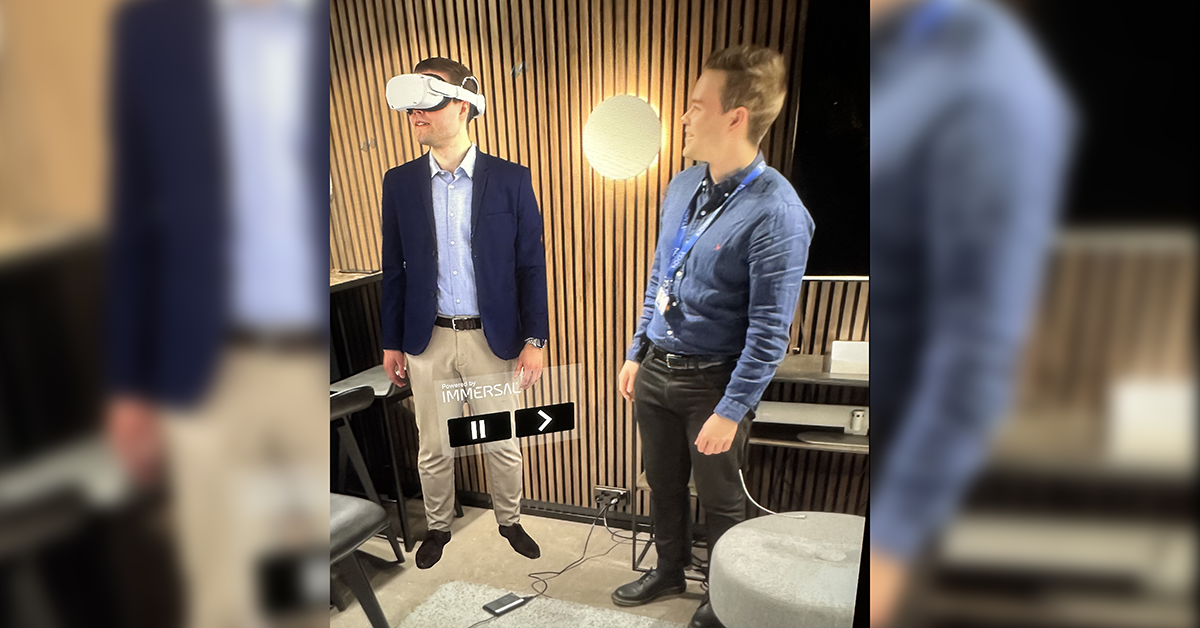
The future of collaboration: My physical self next to my 'digital twin'. This AR experience, built on Immersal's VPS, becomes economically viable for real-time interaction when powered by the low-latency compute of the AI-RAN edge.
4. The Elasticity & Connectivity Problem
The Questions: Jose L Gil [3] correctly pointed out that a single cell site is "inelastic". Dean Bubley [12] asked about interconnects, and Syed Kashif R. Zahid [14] rightly asked if traffic must still "hairpin" back to the core UPF, negating the latency benefit.
The Answer: These are the critical data-flow questions.
First, a single site is inelastic. But AI-RAN is about a new, distributed compute grid of thousands of sites. The "elasticity" for this new grid is provided by the Nokia Network as Code platform [4], which orchestrates workloads accross this global footprint.
Second, to answer Syed and Dean: traffic does not need to hairpin to the core. As NVIDIA has detailed, this AI-RAN arhictecture supports an Accelerated and Distributed UPF (dUPF) running directly on the edge node [15]. This allows for "local breakout" at the cell site itself, keeping the data path entirely at the edge for that guaranteed millisecond-level response.
Conclusion
The expert feedback from this community has been invaluable. It proves that the 15-year logjam is finally breaking - not just because the technology (AI-RAN) is ready, but because business model (Network as Code) is finally here to support it.
References
- Lauri Alho. "We Didn't Just Add AI to the 5G Network. We Replaced Its Engine." (LinkedIn Article, Nov 1, 2025).
- Andrzej Miłkowski, LinkedIn Comment on [1] (Nov 2025).
- Jose L Gil, LinkedIn Comments on [1] (Nov 2025).
- Nokia, "Network as Code" Platform Portal.
- Joe Madden, LinkedIn Comment on [1] (Nov 2025).
- Jeroen van Bemmel, LinkedIn Comments on Andy Jones's Repost (Nov 2025).
- NVIDIA, "Aerial RAN Computer Pro" Datasheet (Oct 2025).
- NVIDIA and Nokia to pioneer the AI platform for 6G (Press Release, Oct 28, 2025).
- Vish Nandlall, LinkedIn Post: "Telco GPU-as-a-Service doesn't work at the cell site" (Oct 2025).
- Lauri Alho, LinkedIn Post: "The Future of Al is Here." (Oct 2025).
- Oussama Bekkouche, LinkedIn Comment on [1] (Nov 2025).
- Dean Bubley, LinkedIn Comment on [1] (Nov 2025).
- NVIDIA, "Multi-Instance GPU (MIG)" (Oct 2025).
- Syed Kashif R. Zahid, LinkedIn Comment on [1] (Nov 2025).
- NVIDIA Technical Blog, "Accelerated and Distributed UPF for the Era of Agentic AI and 6G" (Oct 15, 2025).
Originally published on LinkedIn.